

AI-supported, locally driven screening strategies enable earlier cancer detection and targeted therapy
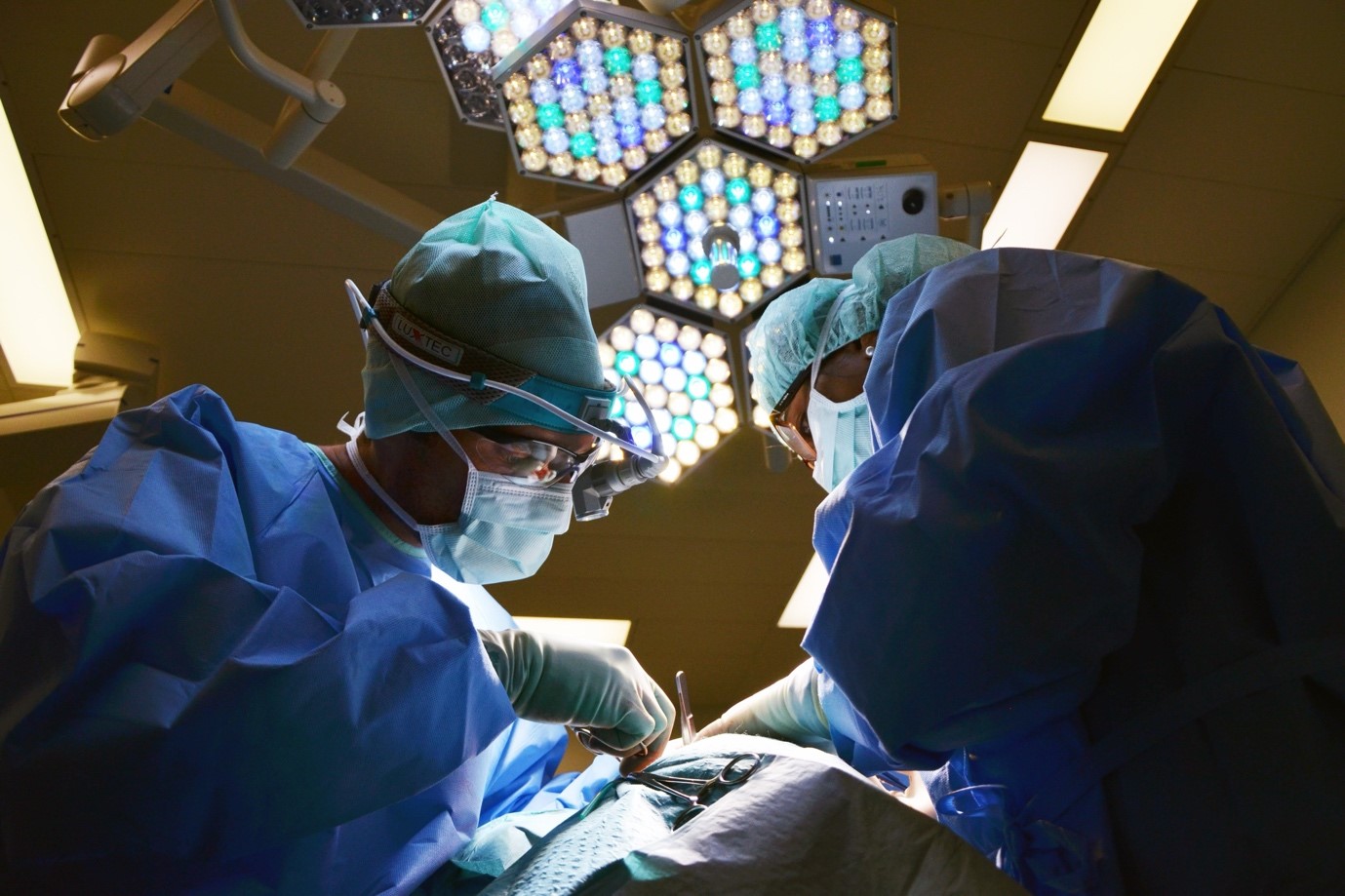
The two-day symposium (20-21 May) brought together cancer researchers, clinicians, laboratory specialists, computer scientists and drug discovery experts from the UAE, Spain, and Russia. Credit: Marionbrun (Pixabay)
Researchers urge oncologists to apply locally driven strategies, supported by stronger regional evidence, to improve early cancer detection and precise care.
SHARJAH, EMIRATE OF SHARJAH, UNITED ARAB EMIRATES, June 22, 2026 /EINPresswire.com/ -- By Ifath Arwah, University of Sharjah
Researchers are calling for the application of locally driven strategies, supported by stronger regional evidence, to improve early cancer detection and precise care. Emphasis is being placed on how diagnostics, biomarkers, and artificial intelligence can be tailored to meet local needs of specific populations.
At a symposium titled “Cancer Research: Genomics, AI, and Targeted Therapies," experts explored the full spectrum of cancer research, ranging from prevention and screening to routine laboratory tests, biomarker discovery, and AI-assisted diagnostics. Central to the discussion was the need to adapt these advances to unique conditions and clinical needs of local patient populations.
Although the symposium, attended by researchers from various countries, focused on cancer patients in the United Arab Emirates (UAE), its broader message was clear: improved outcomes are achievable when screening, detection, and treatment strategies are informed by evidence and research based on local data.
The two-day symposium (20-21 May) brought together cancer researchers, clinicians, laboratory specialists, computer scientists, and drug discovery experts from the UAE, Spain, and Russia. Discussions centered on breast, thyroid, colorectal, and prostate cancers, reinforcing a key argument: screening programs must be linked to local research. In return, local research should help explain why cancer patterns in the UAE may differ from those observed elsewhere.
Professor Riyad Bendardaf, a medical oncologist and the director of the Centre of Excellence for Cancer Research at the University of Sharjah, highlighted that cancer patterns in the UAE do not always mirror global trends, underscoring the need for adopting specific prevention strategies to meet the needs of local populations.
“If we have proper screening tools and proper diagnostic tools, we will decrease the burden by 40% in the UAE,” Prof. Bendardaf stated during his presentation on the global impact of cancer. Referring to breast, thyroid, and colorectal cancers, he added that through effective “screening programs for these three cancers, [we] will decrease the burden of this disease by 56.7%.”
He noted that the UAE’s cancer profile differs from global patterns, particularly thyroid cancer, which is prominent in local figures. “Why is thyroid the second when this is not seen globally? Our figures [are] different from international figures,” he remarked.
According to Prof. Bendardaf, these differences should directly inform how screening strategies are to be designed. Highlighting local data on female cancer cases, he pointed out that “43.8% of female cancer patients in our society are under the age of 50.”
This younger age distribution, he explained, makes it necessary to reconsider when screening should begin. “So, we need to start screening not at the age of 40 but 10 years earlier,” he said. “We have cancer 10 years earlier than we see in Western societies. We need to adjust according to our data and do our screening for younger age groups.”
Lab testing and biomarkers
Speakers also highlighted the growing importance of routine laboratory testing, biomarker discovery, and molecular diagnostics and their central role in guiding cancer monitoring and treatment decisions.
Dr. Noura Ali Alikhayal, Laboratory Director at University Hospital Sharjah in the UAE, outlined the role of routine and advanced laboratory testing across cancer care, from initial assessment and treatment monitoring to survivorship and follow-up. “Routine lab tests remain the essential foundation of cancer monitoring and treatment safety,” she emphasized.
She explained how standard blood and biochemical markers can help clinicians to assess disease burden, detect treatment toxicity, and identify complications early. For example, hemoglobin levels can inform decisions about disease severity, disease treatment toxicity and tolerance, and the need for transfusion. Lymphocyte counts can assess immune status, while an elevated neutrophil-to-lymphocyte ratio has been associated with poor prognosis.
Dr. Alikhayal further underscored the importance of electrolytes and metabolism in oncology care, describing electrolyte imbalance as “among the most common metabolic complications in oncology patients.” Such turbulences, she noted, may result from tumor biology, treatment effects, or systemic disease processes.
“Proactive electrolyte monitoring and early intervention are essential to prevent life-threatening complications during cancer treatment,” she said.
The search for earlier and more accurate cancer markers was also highlighted in discussions on colorectal cancer. Prof. Rifat Hamoudi, director of the Research Institute for Medical and Health Sciences at the UoS, presented work on the identification of early-stage biomarkers using convolutional neural networks, an advanced form of artificial intelligence designed to analyze images and patterns.
“Colorectal cancer is one of the top three cancers worldwide,” he said. “It has high incidence and also high mortality.” He emphasized that the disease is often difficult to detect in its early stages due to the subtlety of symptoms, which makes early diagnosis a real challenge. “It’s not easy to catch it at early stages because of the symptoms,” he explained, stressing the importance of developing reliable early biomarkers to expand treatment opportunities.
Prof. Hamoudi’s presentation also reflected a broader theme of the symposium: the need for researchers from different disciplines to collaborate in cancer research. “What is unique about UoS is we have people from pharmacy, health sciences, oncology, and pathology,” he said. “So, if we work together, we may come up with answers that are more meaningful.”
He cautioned against a narrow disciplinary focus, as it limits understanding. “If we focus only on our field,” he added, “we may not really understand cancer fully because it is so complicated.”
AI in oncology and clinical use
Artificial intelligence emerged as a major theme of the symposium, though speakers repeatedly cautioned against treating it as a simple solution. Instead, they emphasized the need for rigorous validation, interpretation, and clinical relevance.
Prof. Hamoudi highlighted the difficulty of applying AI to histopathology and molecular data, noting the inherent complexity of cancer patterns. Histopathology, the microscopic examination of cancerous tissues, is vital for cancer diagnosis and staging, yet it is still hard for AI systems to provide reliable interpretations.
“Why AI doesn’t work is because the computer is not intelligent enough to really see different patterns that are highly complex and highly intertwined,” he explained.
At the same time, he demonstrated how more carefully designed AI approaches can improve performance. He discussed the use of explainable AI, a technique that enables researchers to understand how an AI model draws its conclusions. He also showed how Grad-CAM, an explainable AI technique, can help in decision-making. According to his presentation, the approach achieved 99.1% classification accuracy in distinguishing between ulcerative colitis, colorectal cancer, and normal colon tissue.
The role of AI in digital pathology was examined from a clinical perspective. Dr. Alikhayal said AI-supported pathology can assist with automated tumor detection, biomarker prediction, outcome prediction, and workflow acceleration. However, she noted that digital pathology and AI are currently more common in research settings than in routine clinical practice, largely due to limitations in validation.
The gap between promise and clinical readiness was a recurring theme, particularly in discussions on generative AI. Dr. Svetlana Illarionova, Head of the Computer Vision Research Group at Skoltech, presented work on virtual staining in histopathology with generative AI.
Her research explored the use of AI to generate immunohistochemistry-like images from standard H&E-stained slides. While H&E staining reveals overall tissue structures visible under a microscope, immunohistochemistry uses antibodies to detect specific proteins in tissue. In breast cancer, for example, HER2 staining helps identify whether cancer cells have high levels of a protein that can affect treatment choices.
Dr. Illarionova compared different AI approaches, including GAN-based methods and diffusion models. While diffusion models can produce higher-quality images, they also require greater computational resources.
Crucially, she stressed that clinical use requires far more than images that appear visually convincing. “Looking right is not the same as being right,” she cautioned.
AI-generated virtual stains, she explained, can distort cell size, blur or merge structures, shift cell positions, or produce features that are not present. For pathologists, who rely on precise cellular details to make diagnostic judgments, such inaccuracies present a major barrier to effective clinical decisions.
For virtual staining to become clinically meaningful, she argued, future systems must incorporate pathology expertise, preserve cell structure, use expert evaluation, and be trained on stronger datasets. “Generic image-to-image translation is insufficient for clinical tasks,” she said.
Dr. Maxim Sharaev, Assistant Professor and Applied AI Research Director at Skoltech, expanded the discussion with a presentation on the role of generative AI in precision oncology. He highlighted the rapid proliferation of AI-enabled medical devices, particularly in medical imaging, while cautioning against viewing generative AI as a direct clinical decision-maker.
“Hallucinations are inevitable,” he noted, warning that generative AI can produce outputs that appear plausible but are inaccurate, misleading, and not grounded in real data. For this reason, he said, such systems should not be used directly in clinical diagnosis.
Instead, Dr. Sharaev argued, generative AI’s most valuable and responsible applications lie in supporting research. These include integrating complex, multimodal forms of patient data, generating synthetic datasets for model training, and embedding expert knowledge into AI systems.
He presented collaborative work focusing on using generative AI to bring together diverse types of patient data, such as pathology images and molecular profiles. RNA sequencing (RNA-seq) reveals gene activity within a sample, while DNA methylation data captures chemical modifications that regulate gene expression. Combined, these data sources can offer researchers a more detailed picture of a patient’s cancer.
Another research stream explores the use of generative models to create synthetic pathological imaging data from healthy MRI scans. This approach addresses the scarcity of labeled disease data and consolidates model training.
“Generated images are not used directly in clinics,” he emphasized. Rather, they can be used as training models and improve performance, particularly in challenging detection tasks.
LEON BARKHO
University Of Sharjah
+971 50 165 4376
email us here
Legal Disclaimer:
EIN Presswire provides this news content "as is" without warranty of any kind. We do not accept any responsibility or liability for the accuracy, content, images, videos, licenses, completeness, legality, or reliability of the information contained in this article. If you have any complaints or copyright issues related to this article, kindly contact the author above.
